How to Overpack and Underpack at the Same Time
We originally planned to hike 100 miles through Utah in the summer, but after looking at what Utah summers had to offer, we decided that battling the heat was probably not the adventure we were looking for. We started checking out other trails around the U.S. and eventually decided, “Hey, why not try a section of the longest trail in the country?”
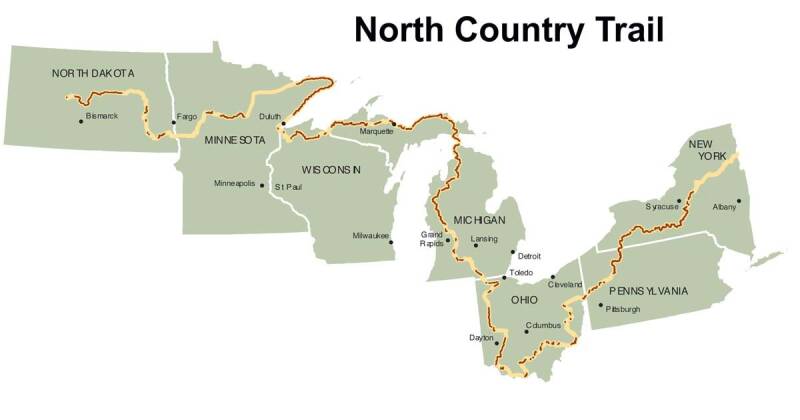
Many people might guess the Appalachian Trail or the Pacific Crest Trail, but the North Country Trail is considerably longer. At roughly 4,800 miles, it stretches from North Dakota all the way to Vermont in a wonderfully serpentine route. Despite being the longest National Scenic Trail in the country, very few people seem to have heard of it. The trail crosses through Minnesota and follows Lake Superior before heading north toward the Boundary Waters area.
We wanted to try a different section of the trail, hopefully somewhere with fewer bugs. I am very glad we did. The Minnesota and surrounding areas were dealing with some awfully poor air quality from wildfires, so heading farther east turned out to be a pretty good decision.
After some searching, we decided the section that passes through Pictured Rocks National Lakeshore would be the most scenic and enjoyable. It also gave us some options to bail out if we found ourselves in trouble, which is always a nice feature when planning an adventure with a eight-year-old.
Originally, I wanted to tackle 100 miles, but after doing some further research, I decided that was probably a little too ambitious. We scaled the goal down to 100 kilometers. The main trek through the park is about 70 kilometers, so we planned to add some additional loops and trails that we could explore without having to carry our full packs for the entire distance.
One slightly unfortunate part of the planning process, which probably worked out for the best, was that we had to reserve our campsites ahead of time. This was different from the Boundary Waters, where you need a permit to enter but campsites are generally first come, first served. Having reservations meant our hiking days were going to be pretty uneven. Instead of walking six miles every day, we had some mammoth days mixed in with some shorter ones.
I would later discover that, regardless of the distance, there were no easy days.
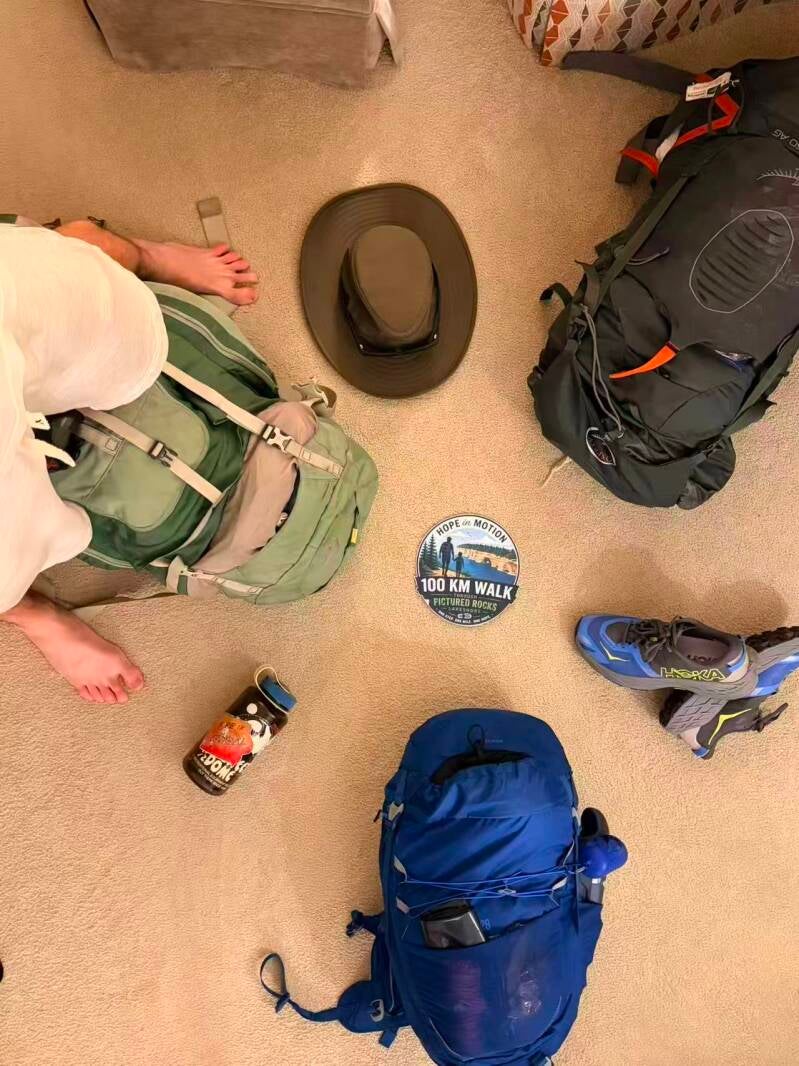
What made this trip particularly challenging was the packing. We were no strangers to camping for extended periods of time, but we had never had to carry nearly everything we needed on our backs for several days at a time. Portaging in the Boundary Waters was probably the closest comparison, but this was different. There, you carry your gear for a while and then get to put it down. On this trip, the gear was basically coming with us everywhere.
This meant trying to find the perfect balance between being prepared and not bringing our entire closet.
We tried to pack enough food, equipment, and clothes without going overboard. When it came down to choosing between a sleeping pillow and a sleeping pad because of limited space, both Brian and I decided that the pillow was more important.
This was a decision we would regret within the first couple of nights. As we packed, we knew we were somehow going to forget at least three things while simultaneously bringing three things we would never actually use. A huge thanks to my longtime high school friends Luke Dwyer and Charlie Randall for helping us compile much of the camping equipment and saving me from a dreaded trip to REI, where I could have easily spent the entire adventure budget on three pairs of socks.
Getting everything into our bags required a combination of advanced Tetris skills and brute strength. Putting the pack on felt heavy, but manageable. Little did I know how much those few extra pounds were going to hurt after carrying them for hours every day.
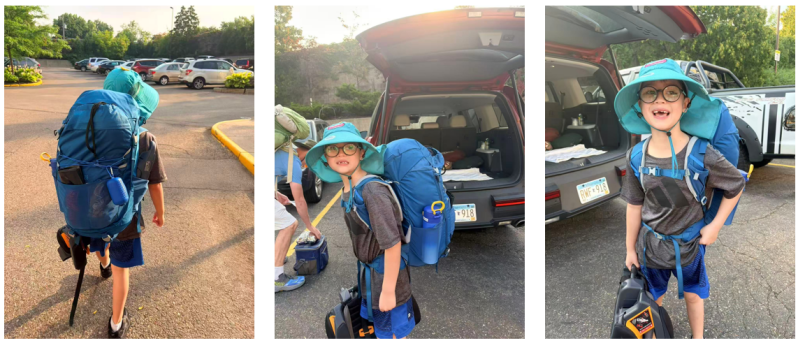
For Lionel’s bag, I tried to keep things as light as possible. I packed his sleeping pillow and some of his lighter clothes in his bag. I also put things he might need quick access to, like wet wipes, smaller snacks, and bug spray. The bag itself looked almost as big as Lionel.
Luckily, it wasn't nearly as heavy as it looked, and Lionel was pretty proud of carrying it.
On the morning of July 26, we packed up Brian’s parents’ car, kissed Mommy goodbye, and headed off on our adventure. After about seven and a half hours in the car, we pulled into the little town of Munising (population… the number of people living in my apartment complex in China).
We stopped at the beginning of the trail to get a feel for where everything was, figure out the parking situation, and make sure we knew where we could get running water. After that, we continued with another Hope in Motion tradition, eating Mexican food before an adventure. This was where Lionel discovered that tacos al pastor are apparently the greatest food ever created.
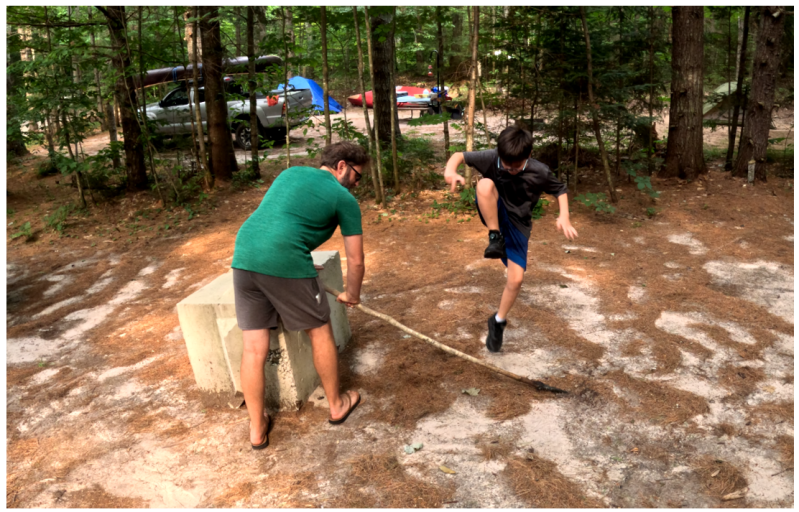
Lionel works to try to break down a stick so we can hit it in the fireplace.
In Munising, we found our reserved campsite and set up the tent for the night. We picked up some firewood and spent the evening sitting around the fire and playing cards.
We had crossed into the Eastern Time Zone, but we were about as far west as you can get while still being in that time zone. This meant the sun didn't set until around 9:20, and it didn't get really dark until close to 10. Eventually, it became too dark to see the cards. So we headed to the tents, crawled into our sleeping bags, and I crossed my fingers that the one I had brought was going to be warm enough.


Create Your Own Website With Webador